
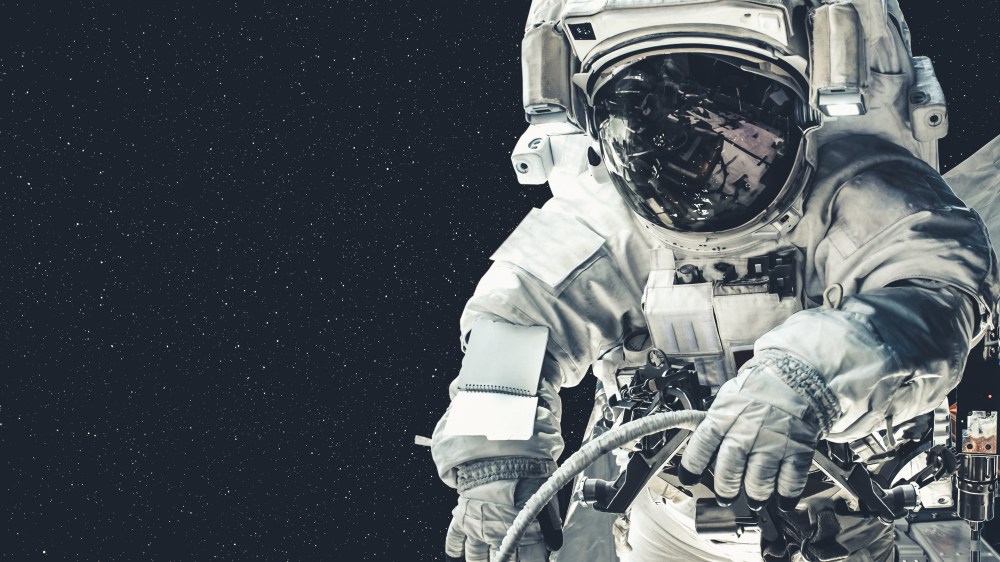
Space is full of wonders—and just as many myths. From exploding astronauts to invisible walls, let’s separate science fiction from space fact.
- Myth: Space is completely empty.
Reality: Space is a vacuum, but it’s not completely empty. There’s sparse gas, dust, cosmic rays, and even stray atoms floating around, especially in nebulae and interstellar space. - Myth: You explode in space without a spacesuit.
Reality: You wouldn’t explode, but you’d suffocate pretty quickly, and the lack of pressure would cause your body fluids to vaporize and your skin to swell. Plus, you’d freeze, but not instantly. - Myth: The Great Wall of China is visible from space.
Reality: Nope! It’s practically invisible from low Earth orbit, especially without magnification. Highways and airports are way more noticeable. It’s not a particularly thick wall, it’s just very long. - Myth: The dark side of the Moon is always dark.
Reality: The Moon does have a far side, but it gets just as much sunlight as the near side. It’s just that we never see it from Earth because the Moon is tidally locked. - Myth: Black holes suck everything in like a vacuum.
Reality: Black holes don’t just gobble up everything around them. Objects have to cross the event horizon to be affected, and from a distance, they act like any other massive object. - Myth: Space is cold.
Reality: Space doesn’t really have a temperature like we’re used to. In the vacuum of space, there’s no medium to conduct heat. You’d lose heat through radiation, but it’s not “cold” like standing outside in winter. - Myth: NASA spent millions developing a space pen, while Russians just used pencils.
Reality: Both used pencils initially, but they posed safety hazards (like graphite dust in zero gravity). Eventually, both space agencies adopted the Fisher Space Pen, which was privately developed. - Myth: In space, you are weightless.
Reality: Astronauts experience microgravity because they are in free fall around the Earth, not because gravity doesn’t exist. Gravity is still about 90% as strong at the International Space Station as it is on the ground. - Myth: Humans will be crushed at the speed of light.
Reality: Nothing with mass can reach the speed of light. The problem is acceleration, not speed—accelerating too fast can generate G-forces that crush you, but constant velocity doesn’t pose that problem. - Myth: The Sun is yellow.
Reality: The Sun actually emits white light. It appears yellow or reddish from Earth due to our atmosphere scattering shorter wavelengths like blue and violet. - Myth: Space travel makes you taller.
Reality: It’s true that astronauts can temporarily gain a bit of height due to spinal decompression in microgravity, but it’s not permanent and they shrink back down on returning to Earth. - Myth: Shooting stars are stars falling from the sky.
Reality: Shooting stars are just tiny bits of space debris burning up as they enter Earth’s atmosphere. Nothing to do with actual stars! - Myth: Venus is Earth’s twin.
Reality: While Venus is similar in size and mass to Earth, it’s an inhospitable hellscape with crushing atmospheric pressure, extreme heat, and sulfuric acid clouds. - Myth: Mars is red because it’s hot.
Reality: Mars is red because of iron oxide (rust) on its surface, not because it’s hot. In fact, Mars is pretty cold! (-63°C on average) - Myth: Time stops at the speed of light.
Reality: Time dilation happens as you approach the speed of light, but time doesn’t literally stop. It just slows down dramatically for the traveler compared to an outside observer. - Myth: Planetary orbits are perfect circles.
Reality: Orbits are elliptical, not circular, which is why planets are sometimes closer to or farther from the Sun during their orbit. - Myth: The Sun will eventually explode as a supernova.
Reality: The Sun isn’t massive enough to go supernova. It’ll swell into a red giant and then shed its outer layers, leaving behind a white dwarf surrounded by a planetary nebula. - Myth: A “day” on the Moon is the same as a day on Earth.
Reality: A single day-night cycle on the Moon lasts about 29.5 Earth days!

 M16 Nebula
Leave a comment