

Stargazing might be beautiful, but the vast night sky with its thousands and thousands of sparkling dots can also be overwhelming and confusing. If you want to be able to identify constellations and get a sense of orientation, try starting with these three simple constellations that are visible during the entire year in the northern hemisphere.
Ursa Major – The Great Bear
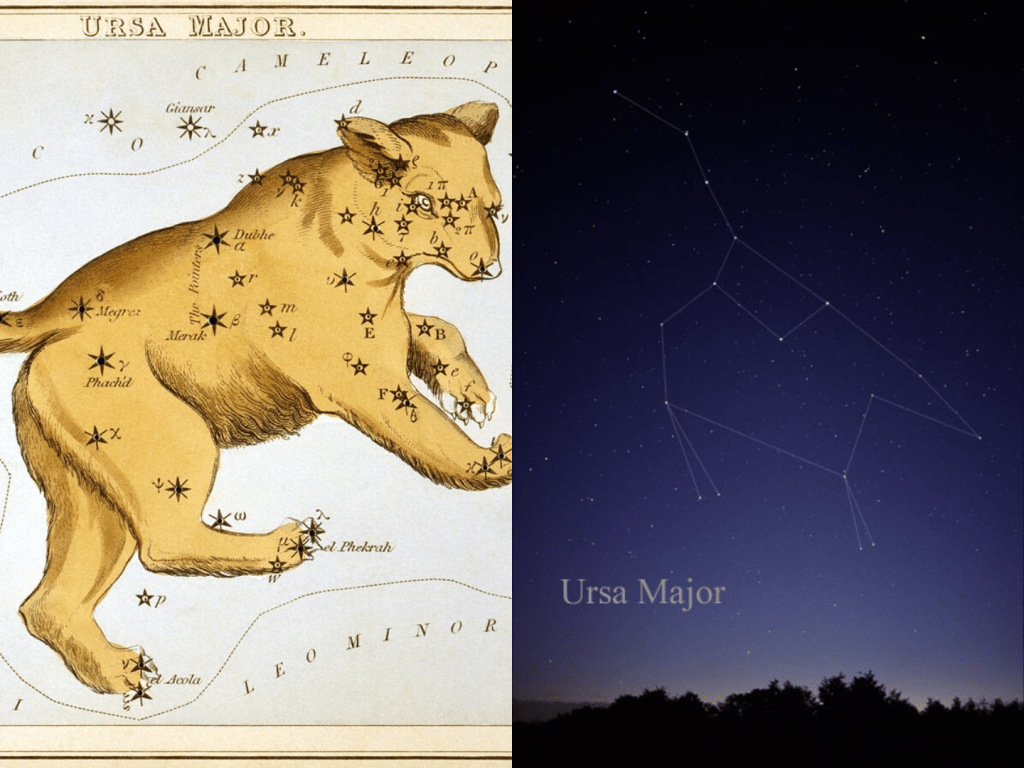
Why it’s easy to spot: It’s large, bright, and has a distinctive “ladle” shape.
How to find it: Look northward; the Big Dipper’s “bowl” points toward Polaris, the North Star. It’s visible high in the sky during spring and summer, while lower on the horizon in autumn and winter evenings.
Fun fact: It is one of the oldest documented constellations, mentioned in ancient Greek, Roman, Native American, and Hindu texts. Many cultures saw it as a bear, even though bears don’t have long tails like the Big Dipper’s handle!
Cassiopeia – The W-Shape
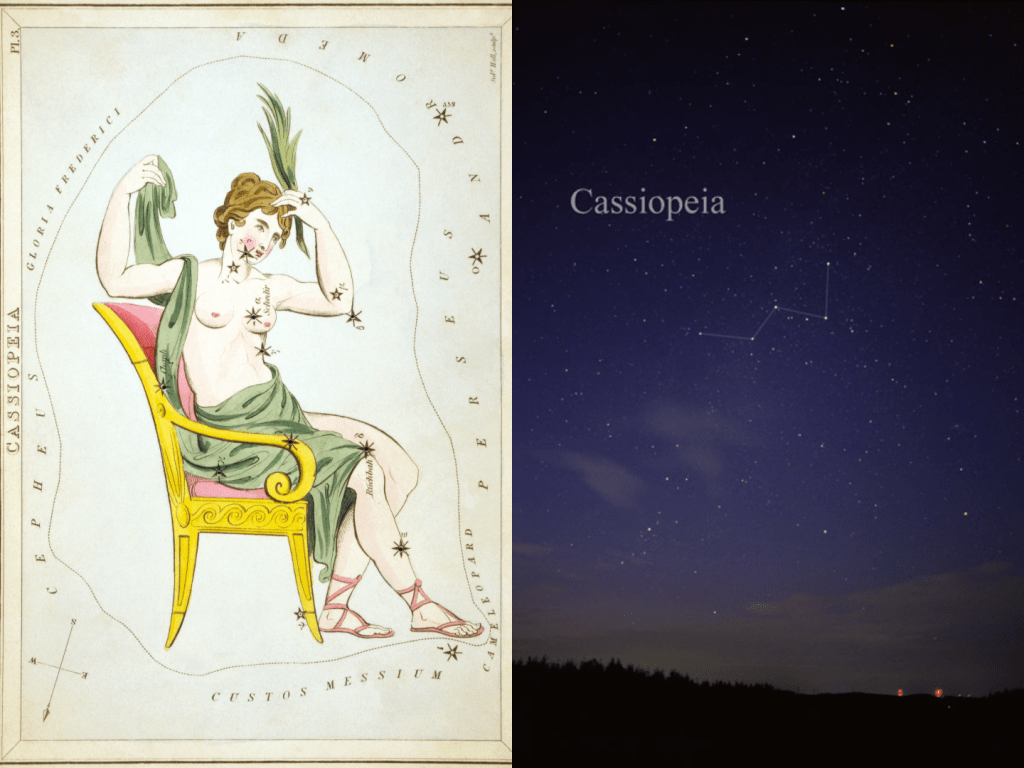
Why it’s easy to spot: Its “W” shape out of fiver stars stands out and is visible year-round near the North Star.
How to find it: Depending on the season, it shifts position around the North Star (Polaris). Fall and Winter: Look high in the northeastern sky during the early evening; Cassiopeia is prominently overhead. Spring: Cassiopeia appears lower in the northwest after sunset, close to the horizon. Summer: It’s visible in the early morning hours, rising in the northeast.
Fun fact: In mythology, Cassiopeia represents a vain queen sitting on her throne. She is the mother of Andromeda.
Orion – Three stars aligned
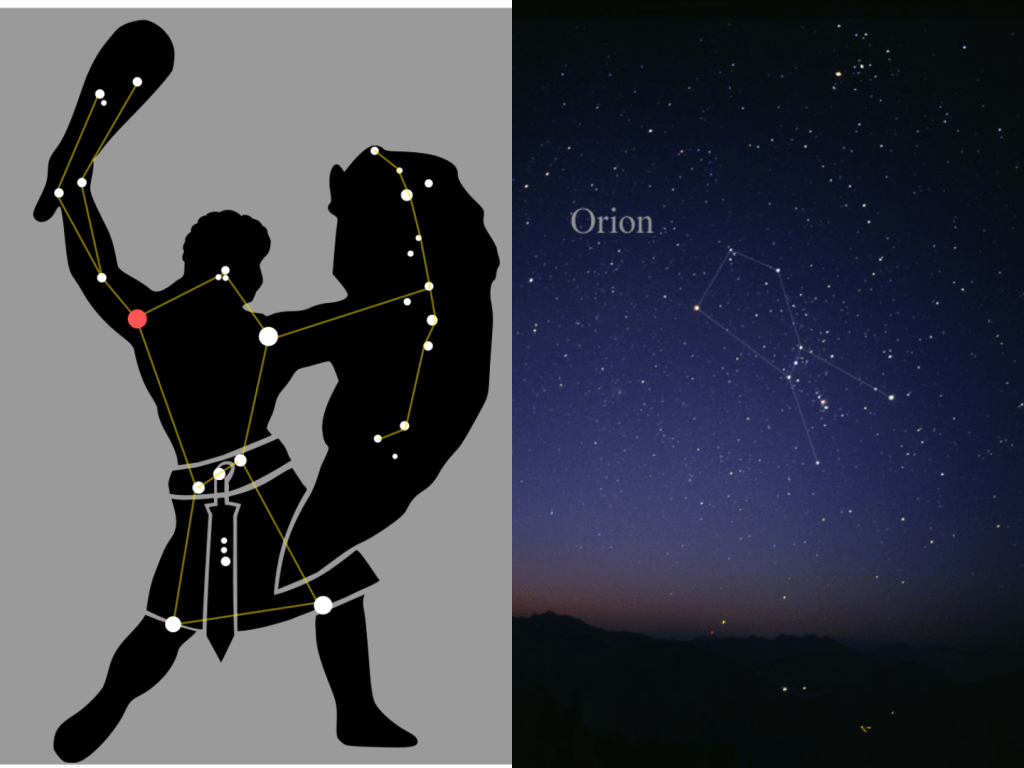
Why it’s easy to spot: Orion’s Belt, made up of three bright stars in a straight line, is very distinctive.
How to find it: Look south during the winter months and toward the horizon during summer mornings. The three stars of Orion’s Belt form a straight line, and the bright stars Betelgeuse (red) and Rigel (blue-white) help anchor the constellation.
Fun fact: The bright star Betelgeuse is a red supergiant nearing the end of its life. It is also the name of Beetlejuice.
Why are some stars and constellations not always visible?
Some constellations, known as circumpolar constellations, are visible all year because they appear to circle the North Star (Polaris) without ever dipping below the horizon. This happens because they are located close to the celestial north pole, making them a permanent feature of the northern night sky as Earth rotates. In contrast, other constellations rise and set because their positions in the sky shift with Earth’s orbit around the Sun. These seasonal constellations are only visible during certain months when the nighttime side of Earth faces the part of the sky where they reside.
 M16 Nebula


.jpg)
#/media/File:CassiopeiaCC.jpg)
_Art.svg)

Leave a comment