
Ancient astronomy has something magical about it. And the instruments used back then by these pioneering scientists and explores seem to carry a piece of this magic within. There are several old and classical instruments historically used in astronomy that are now often seen as decorative pieces, especially on shelves or in study rooms – and even on movie sets for wizardy themed media. (Ok some of this list are too big for that). An overview on the most prominent pieces.
Astrolabe

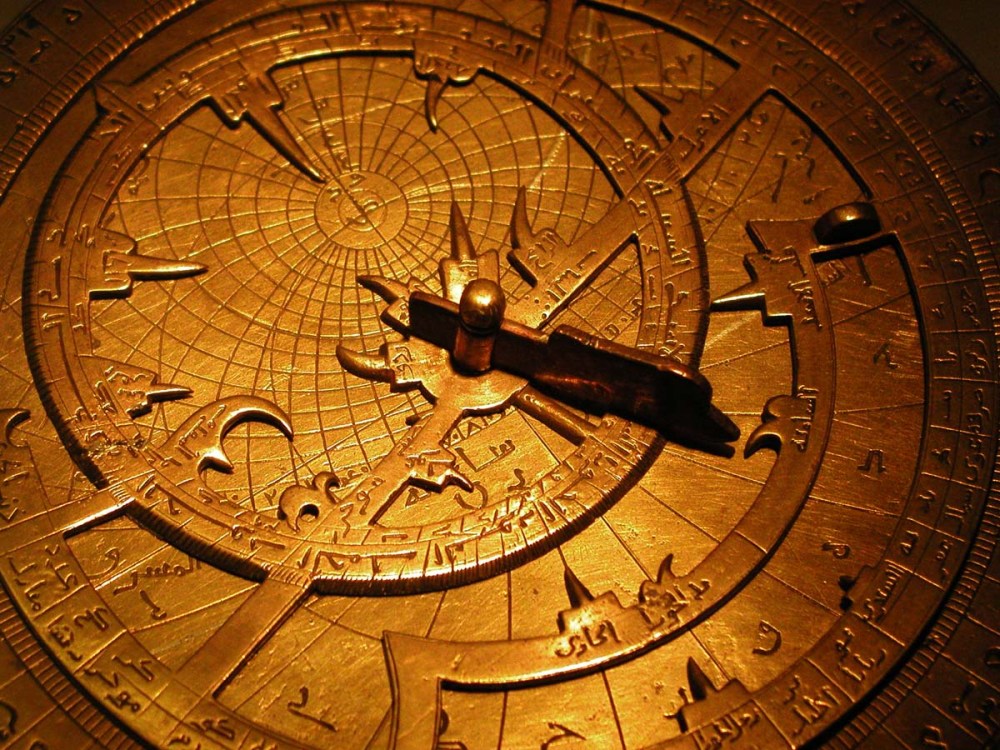
The Astrolabe is an ancient astronomical instrument used for navigation and observing celestial objects, dating back to around 200 BCE. While its origins trace to ancient Greek astronomers, it was extensively developed by Islamic scholars in the Middle Ages, including al-Fazari and al-Battani, who refined it for both astronomy and navigation. The astrolabe consists of a rotating disk (the rete) over a flat plate, engraved with celestial coordinates and a star map, allowing users to solve complex astronomical problems by rotating the components to specific alignments.
By sighting a star or the Sun along the alidade (a movable arm on the back of the instrument) and aligning the rete to match, users can read the altitude and direction of celestial bodies. The astrolabe can also be used to tell time, determine latitude, and locate stars in the night sky based on a given date and location.
Heliometer

The heliometer is an instrument originally designed to measure the apparent diameter of the Sun (“helio” meaning Sun and “meter” meaning measure). It was later adapted for precise angular measurements, particularly of stars, planets, and other celestial objects.
I was first invented by Servington Savery in 1743; it later evolved when John Dollond and Joseph von Fraunhofer refined it, making it capable of precise angular measurements between celestial objects. The heliometer’s unique split-lens design allowed astronomers to create and align two overlapping images to measure small angular distances with great accuracy. In 1838, German astronomer Friedrich Bessel used it to successfully measure the parallax of 61 Cygni, marking the first time a star’s distance from Earth was calculated. This breakthrough proved stars had measurable distances, allowing astronomers to map the universe in three dimensions.
Nocturnal

The Nocturnal is an ancient instrument used to tell time at night by the stars. Dating back to the 15th century, it was especially popular with sailors navigating the high seas before modern clocks were reliable. The nocturnal works by aligning a rotating disk to the current month and then adjusting a pointer to match the positions of specific stars, typically Polaris (the North Star) and Kochab in Ursa Minor. By observing how these stars shift around Polaris over the course of the night, users could read the approximate hour on the nocturnal’s calibrated scale, effectively using the stars’ positions as a natural clock. This tool helped travelers navigate by night when other celestial cues were hidden.
Celestial Globe
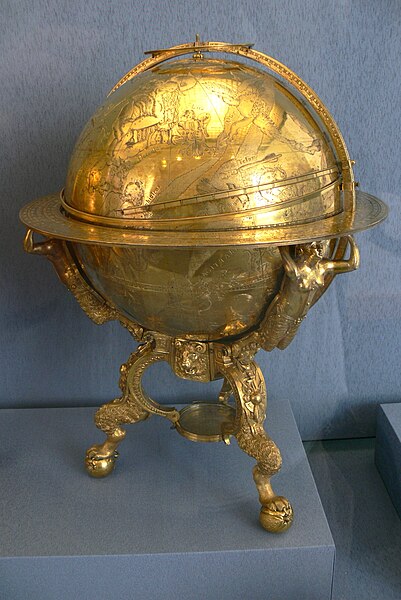
The Celestial Globe has origins dating back to ancient Greece and Mesopotamia, with some of the earliest examples created around 150 BCE by Greek astronomers like Hipparchus and later refined by Claudius Ptolemy. This instrument represents the celestial sphere—an imaginary sphere onto which the positions of stars and constellations are mapped, surrounding Earth. Users can adjust the globe based on their location and time, aligning it to match the positions of stars in the sky. By rotating the globe on its axis, it demonstrates the apparent movement of stars across the night sky, allowing for easy identification of stars, constellations, and celestial events.
The largest surviving celestial globe, built in the 16th century by Tycho Brahe, is over one meter in diameter and exquisitely maps the stars as observed by Brahe’s naked-eye observations.
Sextant
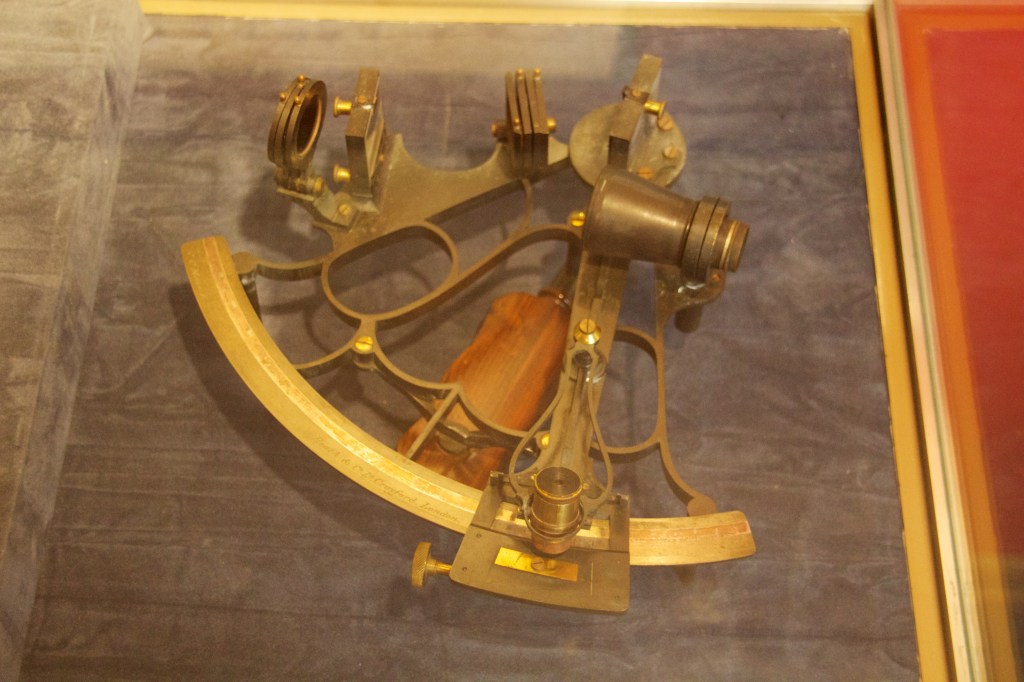
The Sextant is a navigational instrument developed in the 18th century to measure the angle between two visible objects, usually the horizon and a celestial body like the Sun or a star. Invented independently around 1730 by English mathematician John Hadley and American inventor Thomas Godfrey, the sextant became essential for sailors to determine latitude and, eventually, longitude at sea. It features a 60-degree arc (hence the name “sextant”) and mirrors that allow users to measure precise angles by aligning the image of a celestial body with the horizon.
The sextant’s user looks through a telescope on the device, adjusting the arm and mirrors to bring the celestial body’s image down to the horizon line. The angle read on the arc tells the altitude of the object above the horizon, which can then be used, along with the date and time, to determine the user’s position on Earth.
Orrery

The Orrery is a mechanical model of the solar system, designed to demonstrate the relative positions and motions of celestial bodies. It was invented in the early 18th century by George Graham, a renowned British clockmaker, and later refined by others like John Rowley and Joseph Huddart. Named after the Earl of Orrery, who funded the creation of the first widely known orrery, it uses gears and rotating parts to accurately replicate the orbits of the planets around the Sun.
An orrery operates with a series of interconnected gears that rotate at different speeds, each representing a planet’s orbital period. As the central Sun gear turns, smaller gears rotate the planets, moons, and sometimes even asteroids in their respective orbits. The orrery offers a hands-on way to visualize the movements of the solar system, making complex astronomical phenomena, such as retrograde motion, easier to understand.
Armilarry Sphere

The Armillary Sphere is a spherical model of celestial coordinates used to demonstrate the positions and movements of the heavens. Originating in ancient Greece, it was first described by Hipparchus around 150 BCE and later refined by Ptolemy and other astronomers. The armillary sphere consists of a series of concentric rings that represent celestial equators, the ecliptic, and the celestial poles, with the Earth at the center. It was primarily used to illustrate the spherical nature of the sky and the movements of stars, planets, and other celestial bodies.
The armillary sphere’s rings, often made of metal, represent different lines of celestial longitude and latitude, including the equator, ecliptic, and tropics. By rotating these rings, users could simulate the motion of the stars and planets, tracking their positions throughout the year. The central Earth sphere served as a fixed reference point, while the rings, with their adjustable axes, allowed the demonstration of the apparent movement of celestial objects in the sky as seen from Earth.
Old telescopes
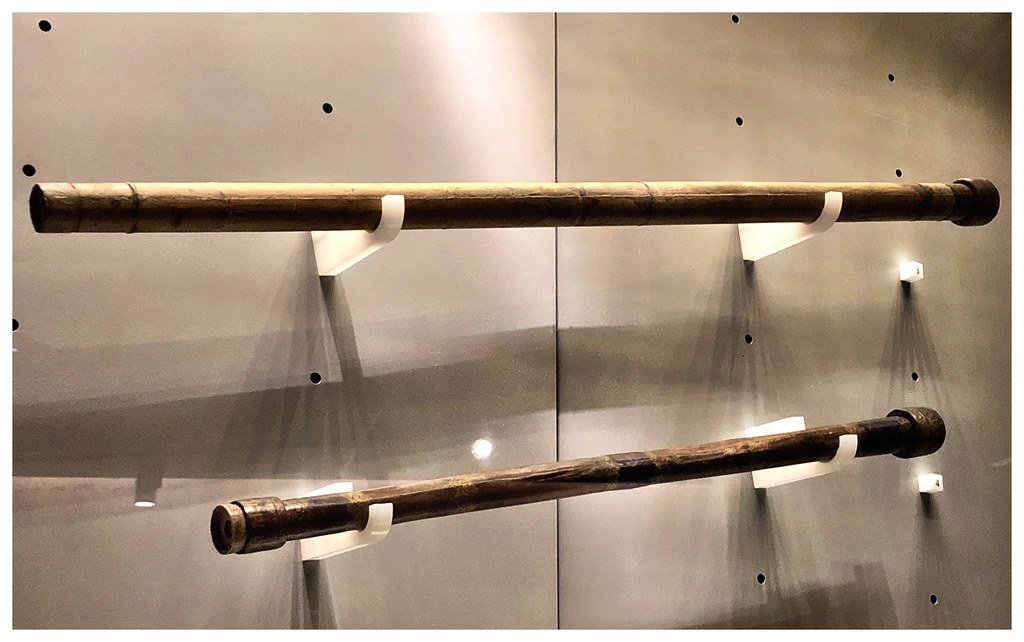
Antique Telescopes are early instruments used to observe distant objects, especially stars, planets, and moons, marking a pivotal moment in the history of astronomy. The first telescopes were invented in the early 17th century, with Hans Lippershey, a Dutch optician, often credited with creating the first patent for the design in 1608. However, it was Galileo Galilei who famously improved upon the design and used it for astronomical observations in 1609. Early telescopes were typically made of brass or wood, with simple lenses that could magnify distant objects.
It operates through a basic system of lenses (for refracting telescopes) or mirrors (in reflecting telescopes). Light from distant objects enters the tube, passing through the lenses or reflecting off the mirrors, which magnify the image for the viewer.
Quadrant
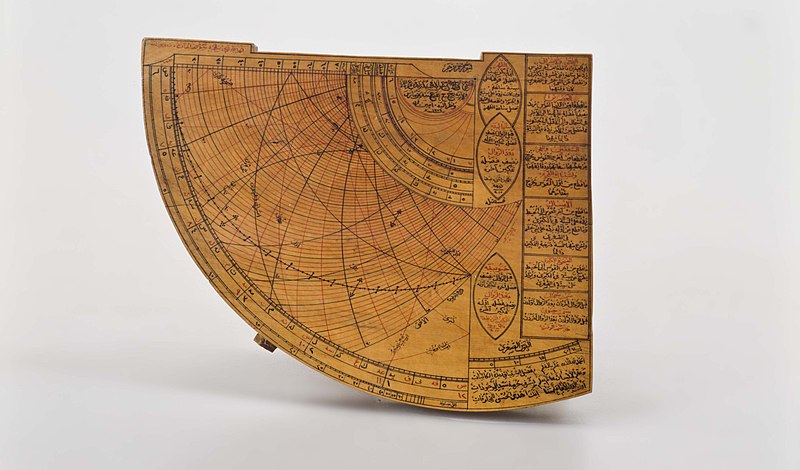
The Quadrant is a historic instrument used for measuring angles, particularly the altitude of celestial objects above the horizon. Developed around 300 BCE, it was first used by ancient Greek astronomers like Hipparchus and later refined by Islamic scientists in the medieval period. The quadrant typically consists of a quarter-circle arc, with a plumb line or sighting device to help measure the angle of a star, the Sun, or any other object in the sky. It’s called a “quadrant” because it measures angles up to 90 degrees, a quarter of a circle.
To use the quadrant, an observer aligns the instrument with the celestial body they wish to measure. By sighting through a sight or pinhole and adjusting the device to match the object’s position, the angle can be read off the calibrated scale on the arc. This angle helps determine the altitude of the object above the horizon, which is crucial for navigation, timekeeping, and astrology.
Volvelle
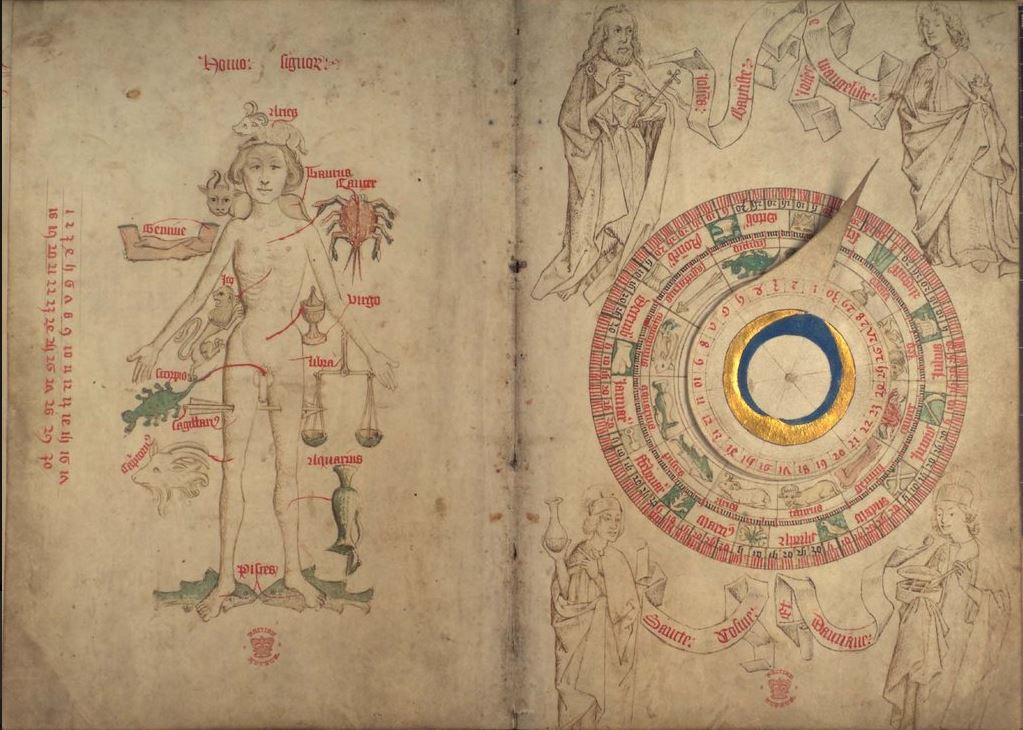
The Volvelle is an ancient rotating paper or parchment device used to calculate and display astronomical, calendrical, and mathematical data. First developed in medieval Europe around the 12th century, the volvelle was often incorporated into astrological and astronomical texts, where its rotating parts helped solve complex problems related to time, position of celestial bodies, and lunar cycles. Unlike most tools, the volvelle is a two-dimensional disc with multiple concentric circles that rotate around a central point, allowing users to align different scales to calculate specific data.
The volvelle operates through its movable discs, each inscribed with various scales for different purposes, such as the zodiac, hours of the day, or positions of the planets. By rotating the discs, users can align specific scales to determine important calculations, like the phase of the moon, the best times for planting crops, or the alignment of the stars for navigation.
Nebra Sky Disk

The Nebra Sky Disk is an ancient bronze artifact dating back to around 1600 BCE, considered one of the most important archaeological finds in the study of early European astronomy. Discovered in Germany in 1999, the disk is thought to have been used by Bronze Age people to represent the night sky and track celestial movements. The Nebra Sky Disk is engraved with symbols that likely represent the Sun, Moon, stars, and constellations, with a detailed depiction of the Pleiades star cluster and a crescent moon.
The disk features a blue-green patina with gold inlays, representing celestial phenomena, including the Sun’s position during the solstices. The moon’s phases are also marked, suggesting that the disk was used to track lunar cycles. The arrangement of the symbols likely served as a calendar or a tool for agricultural and ritual planning, helping ancient people predict important events like planting seasons, harvests, and religious ceremonies tied to celestial events.
 M16 Nebula
Leave a comment